
 |
|
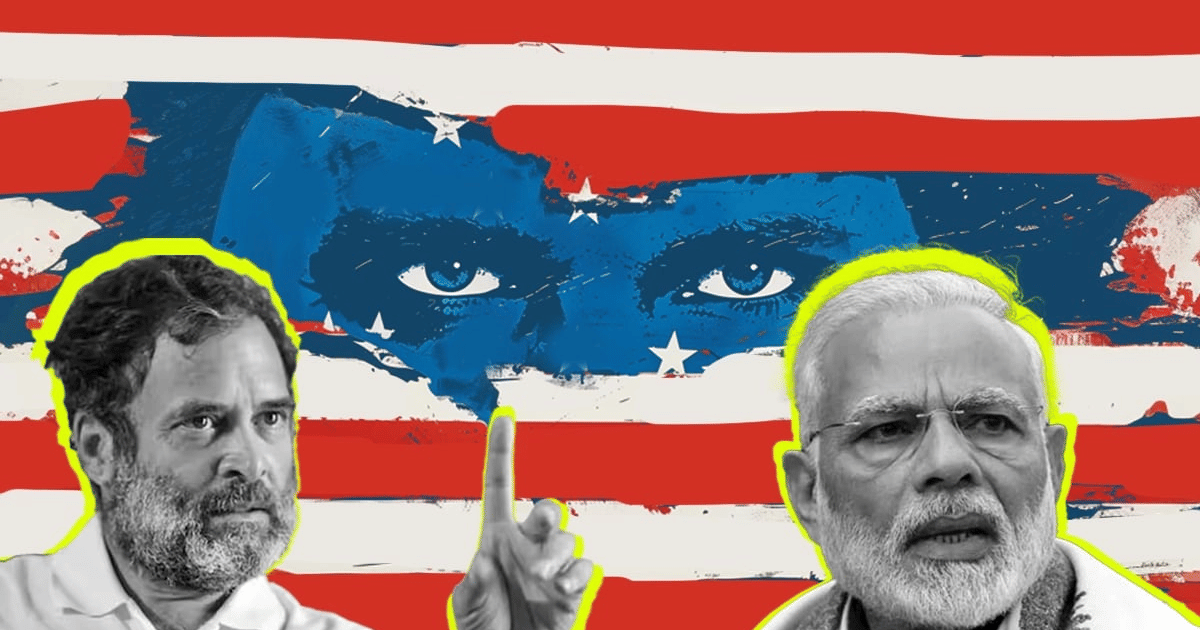
The Bharatiya Janata Party (BJP) launched a scathing attack on Rahul Gandhi, the leader of the opposition, accusing him of being a 'traitor of the highest order' and alleging his connections to anti-India international agencies. This unprecedented, all-out assault, unlike the BJP's usual responses to Gandhi's statements, is analyzed as a calculated move fueled by several factors, most prominently the BJP's recent electoral victories and the upcoming US presidential election.
The BJP's accusations center around alleged links between Gandhi, George Soros, and the Organized Crime and Corruption Reporting Project (OCCRP). They point to Mediapart's reporting linking OCCRP to the US government and claim Soros's Open Society Foundation is a major funder of OCCRP. BJP spokesperson Sambit Patra described a 'dangerous triangle' involving Soros, US agencies, OCCRP, and Gandhi, alleging that OCCRP's reports are used to destabilize Indian markets, with Gandhi subsequently echoing their claims on issues like the Covaxin vaccine, the Pegasus spyware, and the Adani Group. The BJP highlighted instances where OCCRP reports appeared strategically timed ahead of parliamentary sessions, creating disruptions.
This timing, along with the mention of other international actors involved in allegedly interfering with Indian politics, like Rihanna during the 2021 farmer protests, Greta Thunberg's accidental release of a protest toolkit, and the 2008 MOU between the Congress party and the Chinese Communist Party, further strengthens the narrative of coordinated international efforts against India's ruling government. The BJP claims that this narrative was further reinforced by the Russian government's acknowledgement of foreign interference in the 2024 Indian elections and their implication of the opposition in said interference.
The BJP's increased assertiveness in publicly addressing these accusations is attributed to several factors. Their recent victories in Maharashtra and Haryana elections bolstered their confidence and provided them with the political capital to take such a strong stance. Furthermore, the BJP's strategy is seen as heavily influenced by the election of Donald Trump, who has openly criticized the 'Deep State' and is expected to take actions to weaken its influence. The BJP's aggressive campaign might be seen as aligned with Trump's stance on dismantling the Deep State, reducing the risk of potential US intervention or sanctions in India. In contrast, a Democratic administration under Kamala Harris might have reacted more harshly.
The contrast between the potential responses from a Trump versus a Harris presidency is crucial in understanding the BJP's calculated risk. A Trump administration, known for its 'America First' policy and skepticism of the Deep State, is less likely to interfere in India's internal affairs related to this issue. This calculated risk, therefore, allows the BJP to openly challenge what it views as a foreign-backed attempt to undermine the government. Conversely, a Democratic administration, more inclined toward international cooperation, might have seen such actions as unfriendly and potentially taken retaliatory measures.
The article speculates that Trump's election victory might embolden the BJP to engage in more assertive foreign policy moves. Trump’s plans to 'drain the swamp,' including the establishment of an efficiency commission headed by Elon Musk and the declassification of Deep State documents, suggests an environment where India's targeting of alleged Deep State allies might be viewed favorably or at least tolerated. While a Trump presidency might present challenges like trade wars, the shared opposition to the Deep State might be a unifying factor between Modi and Trump.
In conclusion, the BJP's all-out attack on Rahul Gandhi is not just a domestic political manoeuvre. It is a calculated strategy influenced by recent electoral successes and the perceived change in the geopolitical landscape with the election of Donald Trump. The BJP is strategically using Trump's anti-Deep State stance to deflect accusations of authoritarianism or xenophobia while simultaneously challenging what it perceives as foreign interference in India's internal affairs. The timing and intensity of the attack suggest a calculated risk, leveraging Trump’s potential response to solidify their position domestically and internationally.