
 |
|
The recent accusations leveled by the Bharatiya Janata Party (BJP) against the United States, alleging a concerted effort to destabilize the Indian government and specifically target Prime Minister Narendra Modi, have sparked a significant diplomatic incident. The BJP's claims, which center around the alleged funding of the Organized Crime and Corruption Reporting Project (OCCRP) by the US State Department and other entities, paint a picture of a deep-state conspiracy aimed at undermining India's political stability. The party points to the OCCRP's investigative reports on the Adani Group and the Pegasus spyware scandal, suggesting these reports were strategically leaked to harm the Modi government's image, and further alleges that the Congress party actively utilized this information in its attacks against the BJP. This narrative portrays a complex web of international actors, investigative journalism, and domestic political maneuvering, raising serious questions about the nature of US-India relations and the role of independent investigative journalism in shaping political narratives.
The BJP's accusations are not merely assertions of foreign interference; they represent a calculated attempt to shift the blame for domestic political challenges onto external forces. By pointing fingers at the US State Department and organizations like the OCCRP, the BJP seeks to deflect criticism and consolidate its own base. This strategy is consistent with previous instances where the party has framed domestic opposition as part of an external conspiracy. The timing of these accusations, coming amidst ongoing domestic political tensions and heightened scrutiny of the Modi government, further strengthens the perception of a strategic political maneuver rather than a purely objective assessment of foreign influence. The accusations also raise concerns about the potential chilling effect on investigative journalism, particularly for outlets that receive funding from US-based organizations. Critics argue that such claims could be weaponized to discredit critical reporting and stifle public accountability.
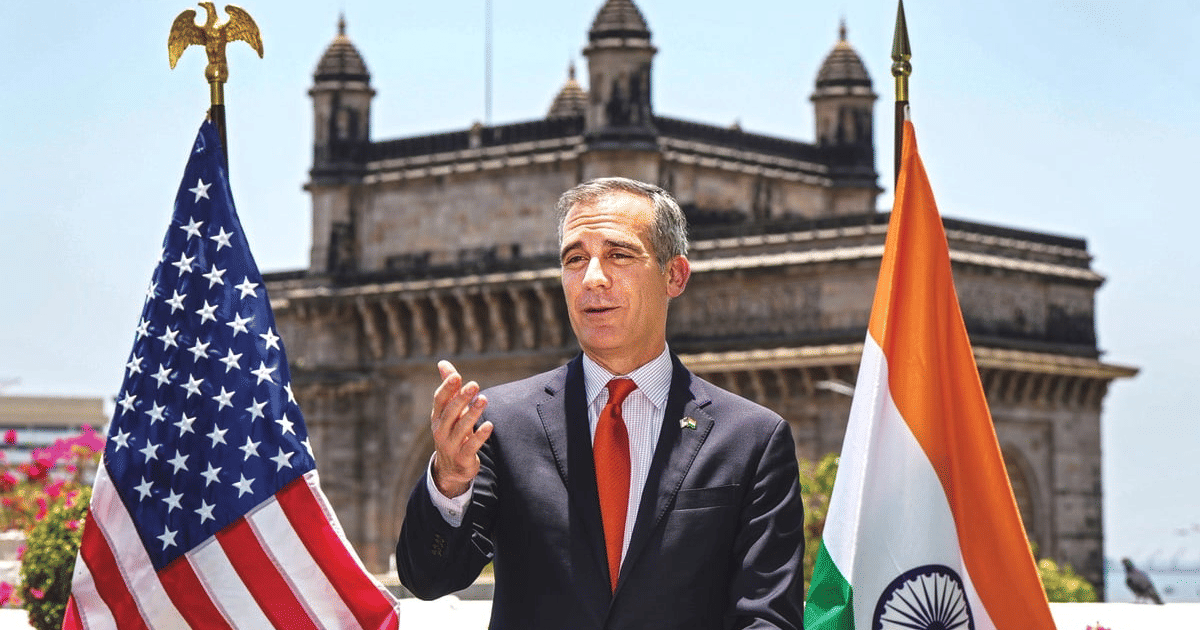
The US Embassy's swift and pointed rejection of the BJP's allegations underscores the gravity of the situation. The Embassy's statement emphasizing its support for a free and independent press, while acknowledging its collaboration with independent organizations for journalistic capacity building, carefully avoids directly addressing the core claim of US involvement in an anti-Modi campaign. The Embassy's response highlights the delicate balancing act involved in maintaining diplomatic relations while upholding the principles of media freedom. The US government walks a tightrope; it needs to maintain a strong relationship with India as a strategic ally while simultaneously defending the integrity of its own initiatives related to journalistic support. This response leaves room for further clarification and dialogue, but also suggests a potential for lasting damage to the bilateral relationship if the accusations are not adequately addressed. The matter highlights the intricate interplay between domestic politics, international relations, and the role of investigative journalism in holding powerful actors accountable, particularly in a globalized world where information flows freely across borders.
The core of the BJP's claims rests on the funding of the OCCRP, a respected investigative journalism organization. The BJP asserts that a significant portion of OCCRP's funding comes directly from the US State Department, implying a direct link between the US government and the reports targeting the Modi government. However, the precise nature of this funding and its influence on OCCRP's editorial independence are yet to be fully clarified. The OCCRP itself has not directly responded to the accusations, leaving a vacuum of information that the BJP can exploit to its advantage. Furthermore, the involvement of other organizations like the Rockefeller Foundation and George Soros, mentioned in the BJP's accusations, adds another layer of complexity, raising the question of whether this represents a coordinated effort or simply the overlapping funding sources common in the world of non-profit investigative journalism. This ambiguity leaves the public to grapple with conflicting narratives, undermining trust in both the investigative reporting and the political claims made about it.
The implications of this ongoing dispute extend beyond the immediate political context. The incident raises broader questions about the role of investigative journalism in holding governments accountable, the potential for foreign interference in domestic political processes, and the importance of transparency in funding sources for non-profit organizations. The international community is watching closely as this unfolds, as the accusations have implications for global perceptions of both India and the United States. The episode underscores the need for increased transparency in international funding for investigative journalism to avoid the potential for such accusations and to maintain public trust in the integrity of investigative reports. It also highlights the challenges faced by investigative journalists working in politically sensitive environments, who often face pressure and accusations of bias from various sides.
The future trajectory of US-India relations, in the wake of these accusations, remains uncertain. While the US Embassy has responded officially, the BJP's allegations are unlikely to be easily dismissed. Both sides now need to navigate this delicate situation to avoid further escalating tensions. Open dialogue, transparency, and a commitment to upholding democratic principles will be crucial to finding a resolution. The incident also necessitates a deeper examination of the ethical considerations and funding structures within the world of investigative journalism, to ensure the independence and credibility of such organizations are not undermined by political machinations. Ultimately, the outcome of this conflict will have significant consequences for the future of the relationship between the US and India, shaping the landscape of global politics and the role of investigative journalism in a complex world.