
 |
|
The recent detention of prominent Patna educators Faizal Khan ('Khan Sir') and Motiur Rahman Khan ('Guru Rahman') highlights a significant ongoing conflict within the Bihar Public Service Commission (BPSC) examination system. Their arrest, alongside numerous civil service aspirants, underscores the deep-seated anxieties and frustrations surrounding the contentious issue of 'normalization' in the upcoming BPSC preliminary test scheduled for December 13th. The protesters' central demand is a clear, written declaration from BPSC chairperson R B Parmar explicitly stating that normalization will not be applied to the results. This demand stems from a deep distrust of the BPSC's ambiguous pronouncements and a fear that normalization, a process designed to adjust for variations in difficulty between different examination shifts, will unfairly disadvantage many deserving candidates.
The core of the controversy lies in the potential for normalization to skew results. While intended to ensure fairness by accounting for discrepancies in question paper difficulty across different exam shifts, protesters argue that its application in the context of a General Studies examination, where questions are inherently subjective and not easily quantifiable, is fundamentally flawed. Khan Sir's statement to reporters succinctly captures this sentiment: 'This is not Mathematics that can fetch uniform marks. The examination is of General Studies, where questions cannot be quantified and it would be absurd to adopt normalisation.' This underscores the belief that normalization, while potentially justifiable in standardized, objectively scored tests, is inappropriate for a subject as complex and nuanced as General Studies. The fear is that the process could unfairly penalize candidates who happened to receive a comparatively more challenging question paper, potentially denying them a well-deserved place in the merit list. Guru Rahman's commitment to supporting the students' protest, echoing their concerns and highlighting the lack of transparent communication from the BPSC, amplifies the urgency and importance of the issue.
The BPSC's own statements regarding normalization have been marked by significant ambiguity. While secretary Satya Prakash Sharma has confirmed that the examination will be held in a single shift and that no formal decision on normalization has been made, aspirants remain unconvinced. They insist on a formal, written statement from the chairman, demanding unequivocal clarity regarding the application of normalization. This lack of transparent communication fuels the protestors' mistrust and underscores the need for the BPSC to act decisively and transparently to address their concerns. The history of normalization within the BPSC itself further exacerbates the situation. The controversial use of normalization in the 64th Combined (Preliminary) Competitive Examination in 2018 led to widespread protests after several candidates pointed out errors in the marks calculation process. The subsequent intervention of the Patna High Court, resulting in a re-evaluation of scores and a subsequent revision of the merit list, serves as a stark reminder of the potential for normalization to generate significant controversy and injustice. This past experience underscores the protestors' apprehension and reinforces their demands for complete transparency and a clear commitment to fairness in the upcoming examination.
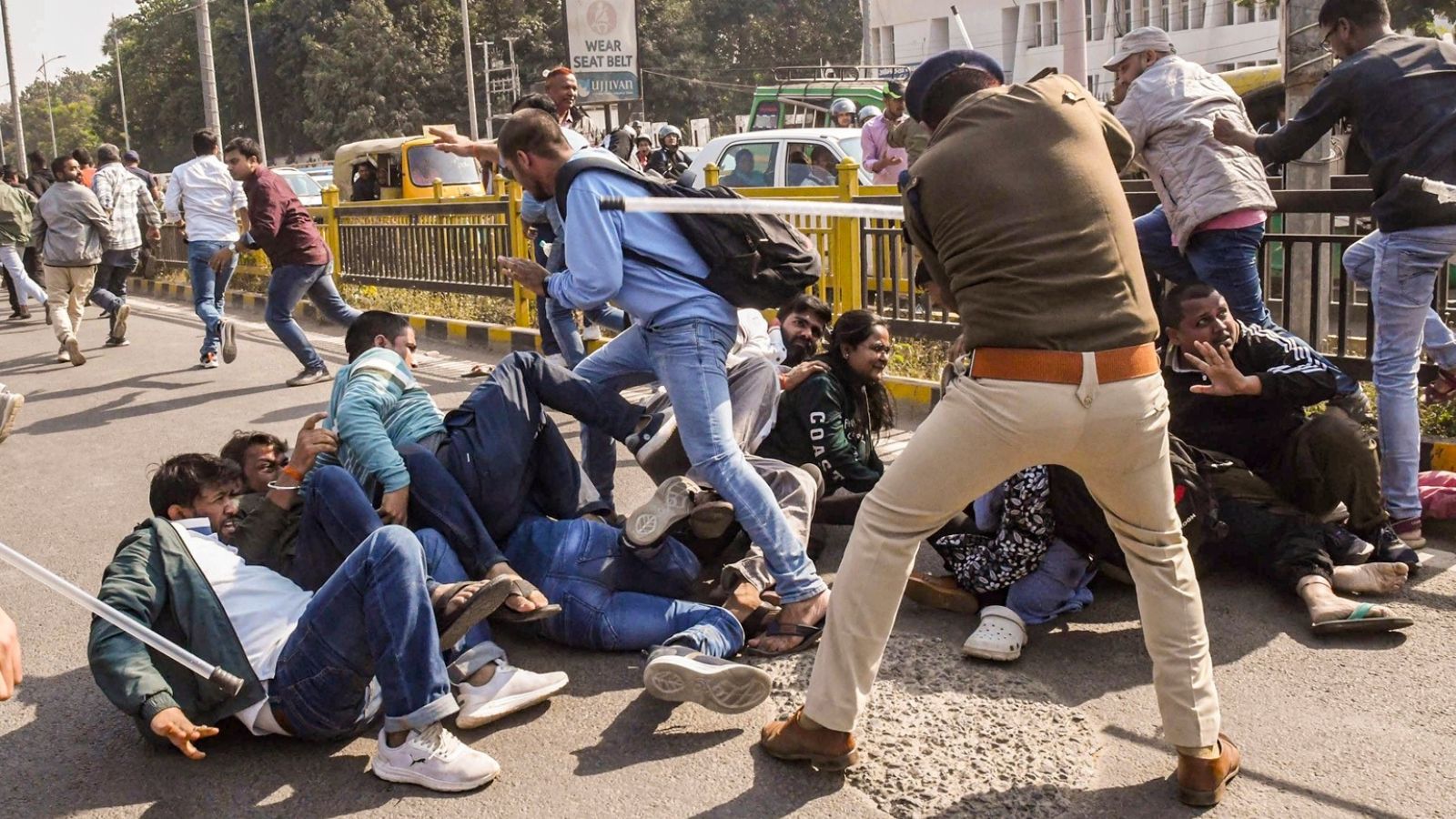
The police response to the protests, involving detentions and a lathi charge, only further inflames the situation and raises concerns about the handling of peaceful dissent. The use of force against protestors expressing legitimate concerns about fairness and transparency in the examination process is likely to worsen tensions and could further escalate the conflict. The ongoing protest, involving prominent educators and numerous civil service aspirants, underscores a systemic issue within the BPSC examination process. The lack of clear communication, previous controversies surrounding normalization, and the apprehension of candidates regarding potential unfairness all contribute to the intensity of the current situation. The need for decisive and transparent action from the BPSC to allay the concerns of the aspirants and restore faith in the impartiality of the examination process is paramount. The future of this protest and the ultimate outcome will significantly impact the trust and confidence of aspiring civil servants in the fairness and integrity of the BPSC’s processes.