
 |
|
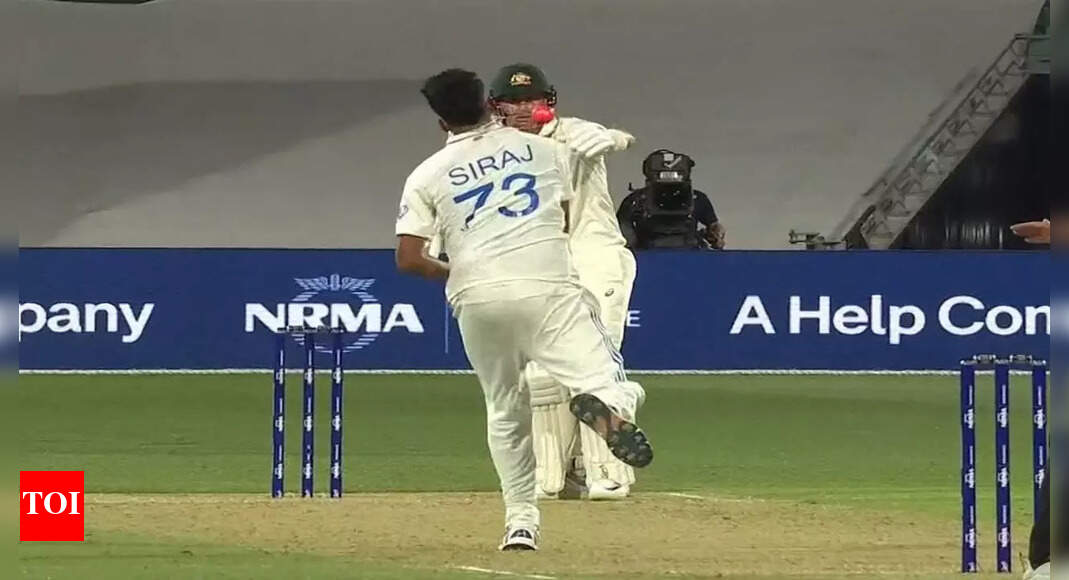
The second day-night Test match between India and Australia in Adelaide witnessed an unusual incident that sparked tempers on the field. The incident involved Indian fast bowler Mohammed Siraj and Australian batsman Marnus Labuschagne, culminating in Siraj throwing a ball at Labuschagne in a display of frustration. The trigger for this outburst was the unexpected interruption of a delivery by a spectator. A spectator, carrying what appeared to be multiple cups of beer (a 'beer snake'), inadvertently walked into the line of sight of Labuschagne, obstructing his view just as Siraj was about to bowl. This forced Labuschagne to pull out of his batting stance at the last moment, disrupting the delivery and visibly upsetting Siraj. The act of the spectator, though unintentional, perfectly encapsulates the unpredictable nature of live sporting events where external factors can significantly impact the flow of the game.
Siraj's reaction was immediate and forceful. Having already begun his bowling action, he was abruptly halted by Labuschagne's withdrawal. In response, he vented his frustration by throwing the ball towards Labuschagne's end. While it didn't directly hit the batsman, the gesture was undeniably aggressive and indicative of Siraj's anger at the disruption. The incident was further fueled by the fact that Siraj was on the verge of delivering a crucial ball, and the sudden interruption likely felt like a major disruption to his rhythm and the overall team strategy. The subsequent exchange of words and arm-waving between the two players underscored the intensity of the moment and the tension that built up after the unexpected incident. Umpires intervened, attempting to de-escalate the situation and maintain order on the field, although the images of Siraj's frustrated reaction, quickly circulated online, generating a considerable buzz amongst cricket fans and commentators alike.
The incident is a microcosm of the pressures and emotional volatility inherent in high-stakes international cricket. While Labuschagne's actions were entirely reactive, the spectator's unintentional interference provides a critical context. It highlights the challenges faced by players and officials in maintaining focus amidst unexpected interruptions, showcasing the delicate balance between intense competition and the need for sportsmanship. The incident also underscored the stringent rules and protocols governing spectator behaviour during matches of this magnitude. The consequences of such actions, even unintentional, can have a significant impact on the game’s flow and the emotional state of the players involved. The potential for similar incidents to occur in the future necessitates a careful review of security measures and spectator guidelines to minimize disruptions and maintain the integrity of the game.
Despite the interruption and subsequent tension, Australia managed to end the day's play with a relatively stable score. After the dismissal of Usman Khawaja, who scored 13 runs, Labuschagne and Nathan McSweeney combined to form a solid partnership, forging an unbeaten 62-run stand for the second wicket. This ensured Australia ended the day at 86/1, setting the stage for a potentially exciting continuation of the match. The incident, although significant in its immediate context, did not ultimately alter the strategic trajectory of the game, at least not dramatically. It serves as a reminder, however, that the human element remains paramount in sports, and moments of unexpected disruption and emotional response can significantly colour the narrative of a match. The narrative of this game will undoubtedly be interwoven with this anecdote, shaping the wider perception of the match itself.
Source: Beer snake forces late Marnus Labuschagne pull out, fuming Mohammed Siraj does this! Watch